

Beauty trends come and go. Fortunately, the era of overfilled faces has left the building. Some celebrities have had very public breakups with their filler, such as Courtney Cox, Lisa Rinna, and Kristen Davis, among many others. Filler is not, in and of itself, a bad thing. It is one of my favorite procedures for its versatility and ability to instantly transform facial balance and harmony. But the wrong filler placed in the wrong location by someone without proper training or artistry has given the procedure a black eye.
Often referred to as Overfilled Face Syndrome, Instagram Face, Pillow Face, or Mar-a-Lago Face, you don’t have to look far to see people who no longer look like, well, people. Improper placement and excessive use of filler can cause chipmunk cheeks, duck lips, monkey mouth, and pillow face. The eyes can appear too deep, too small, or closer together when too much filler is placed in the temples or cheeks. Misplaced under-eye filler can look like permanent bags that are worse than the dark circles it was meant to correct. Lips should not overpower the face. A little goes a long way. Subtlety, expertise, and experience are paramount to achieving a safe and satisfying transformation that does not draw attention to itself.
If you are no longer “feeling” your filler and would like to start fresh, filler dissolution could be right for you. The best way to make the break is to consult with a Double Board Certified Facial Plastic Surgeon. With over 32 years of experience using facial fillers, I have seen it all. As a Facial Plastic Surgeon, I have extensive knowledge of facial anatomy and an innate sense of what makes a face look natural. I see facial fillers as an art form requiring the eye of a painter, the hands of a sculptor, and the precision of a surgeon. For patients who are good candidates for filler removal, I dissolve the fillers with the same attention to detail used during placement. Harmony and balance can be restored, along with a more natural appearance.
What Is Involved in Filler Removal?
Filler removal, or dermal filler dissolution, is a non-surgical treatment used to reduce or eliminate hyaluronic acid-based fillers that are causing aesthetic or functional concerns.
The most commonly used fillers are hyaluronic acid (HA) fillers such as Restylane®, Juvéderm®, and RHA®. Hyaluronic acid is a naturally occurring substance in the body that supports healing and hydration. HA fillers can be dissolved using hyaluronidase. Some fillers dissolve more easily than others. Some patients see full correction in one session, while others may require multiple treatments.
Other fillers are made from synthetic substances such as calcium hydroxylapatite, poly-L-lactic acid, and polymethylmethacrylate (Radiesse®, Sculptra®, and Bellafill®, respectively). These fillers cannot be dissolved with hyaluronidase because they do not contain hyaluronic acid, and they are more difficult to remove.
Hyaluronidase is an injectable enzyme that breaks down unwanted hyaluronic acid filler in targeted areas. Because the face contains delicate vascular and soft tissue structures, safe and predictable results require advanced expertise in facial anatomy.
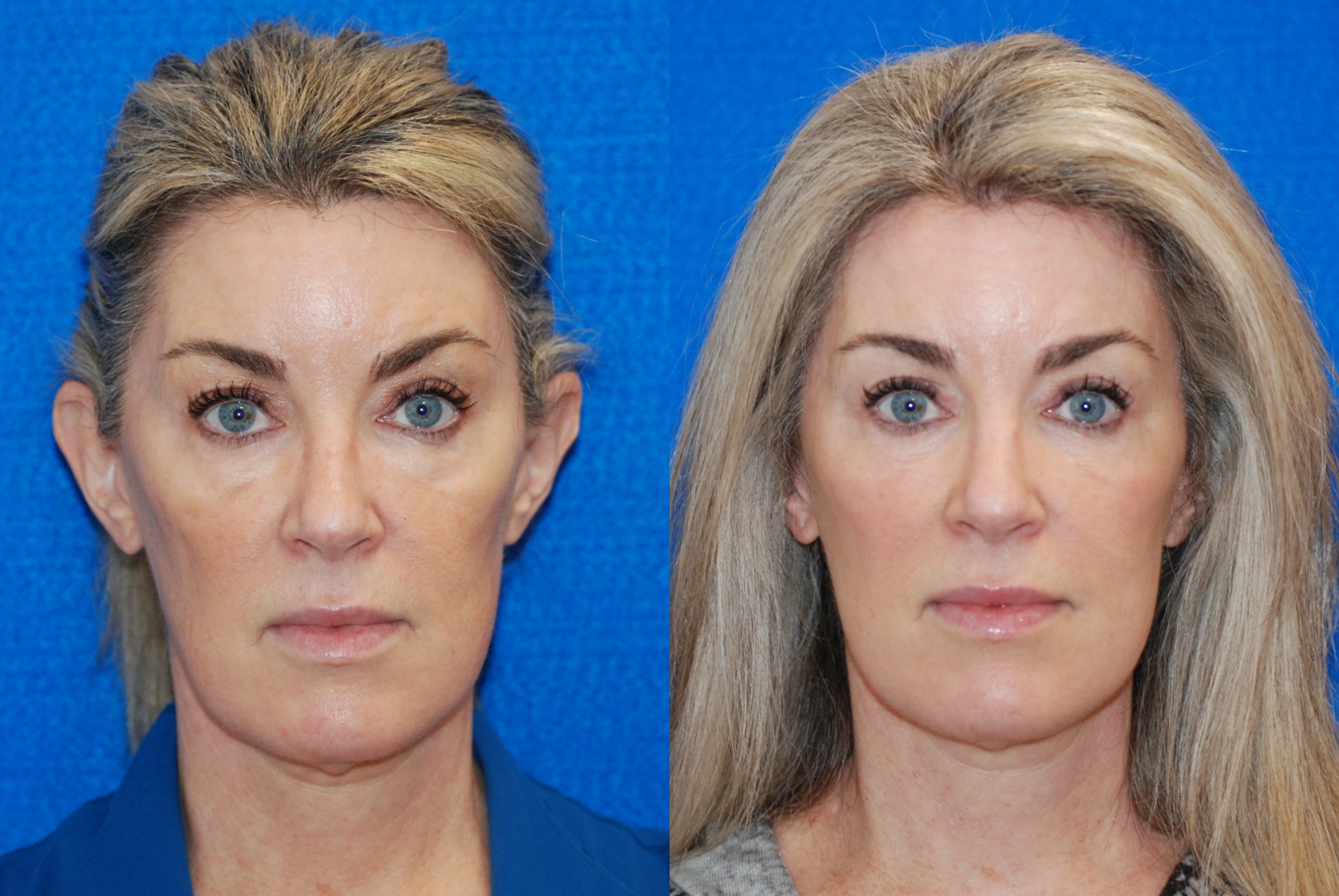
How Do I Know if I Need Filler Removal?
You may be a good candidate if prior hyaluronic acid filler treatments did not produce the results you desired — such as puffiness, asymmetry, overcorrection, or an unnatural appearance. Fillers may also shift over time or migrate, leading to changes that no longer reflect how you want to look or feel.
When hyaluronic acid fillers are placed too close to the surface of the skin, they can cause a “Tyndall effect,” where the skin appears to have a bluish tint. This can usually be treated effectively with hyaluronidase.
Fillers can be removed immediately after placement, years later, or anytime in between.
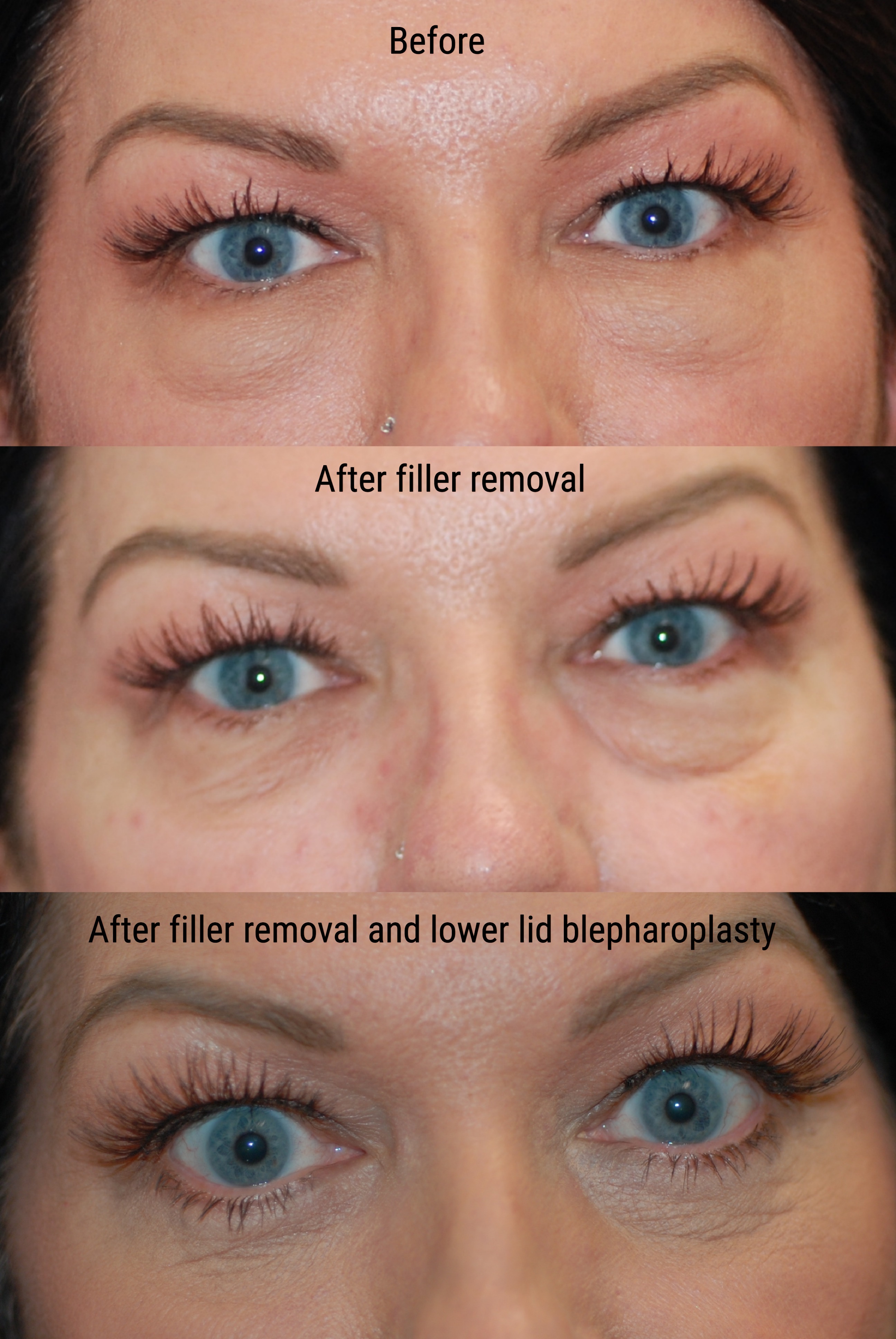
Occasionally, patients seek surgery for under-eye bags or puffiness when the issue is actually lingering filler from previous tear trough or cheek treatments — sometimes placed years prior. In some cases, filler removal alone resolves the issue; in others, a combination of filler removal and lower lid blepharoplasty may be recommended.
For example, Bunnie Xo (The singer Jelly Roll's wife and an influencer) recently shared that she chose to undergo a facelift at age 46 after experiencing lingering effects from past filler treatments. Despite stopping filler years prior and attempting to dissolve it multiple times, she reported that some product remained, causing swelling and migration. In her case, a facelift allowed her surgeon to remove residual filler while restoring a smoother, more balanced appearance, highlighting how surgical intervention can sometimes address concerns that non-surgical treatments cannot fully resolve.
If you are considering filler dissolution, it is helpful to know what type of filler was used, when it was placed, and how much was injected. Having records from previous treatments improves safety and effectiveness. Medical practices are required to maintain detailed treatment records, and you have the legal right to request a copy.
The consultation is an essential part of the process. Your medical and injectable history will be reviewed, concerns discussed, and a comprehensive facial evaluation performed using 2D and 3D imaging. Imaging helps demonstrate how filler may be impacting facial balance and how harmony can be restored through partial or complete removal. In some cases, filler removal may be recommended prior to facial surgery. If removal is not indicated, imaging can clarify alternative treatment options that may better achieve your goals.
Treatment, Recovery & Results
Filler removal is performed in-office and typically requires a brief appointment. After cleansing the skin, hyaluronidase is carefully injected into targeted areas using a very fine needle. Comfort measures are used as needed. Some improvement may be visible within hours, with continued changes over several days as the filler breaks down. Downtime is usually minimal, with temporary swelling, bruising, redness, or tenderness resolving quickly. Additional sessions may be recommended depending not the type or amount of filler. Avoiding blood thinners for a week or two before your treatment and for a few days after treatment can reduce the risk of side effects.
Once the filler has been satisfactorily dissolved, whether with one or multiple sessions in some cases, some people choose to have filler placed again with the goal of a more natural and beautiful outcome. We have patients wait at least a week for the Hyaluronidase to stabilize, and all swelling and bruising have resolved before injecting fillers in the same area.
Facial Filler is one of the most effective and least invasive ways to achieve facial balance and harmony, BUT it must be done with artistry, experience, and expertise. Fortunately, its never too late for a reset of your facial filler.
Reach out to us for a consultation, in person or virtually, to see if your filler is still working for you or if it's time to dissolve it and start fresh.